BridgeMatters

This blog provides supplementary thoughts and ideas to the www.bridgematters.com site. If you haven't seen the main site, there is a lot there including the Martel and Rodwell interviews, photos, and articles. This blog is focused on advancing bridge theory by discussing the application of new ideas.

Monday, June 22, 2009

Tiny Meckwell

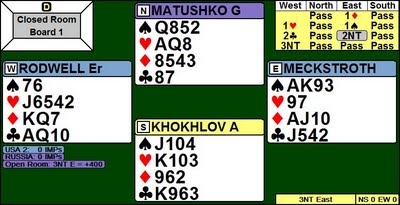
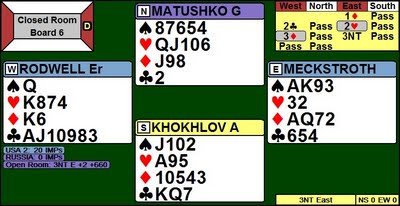
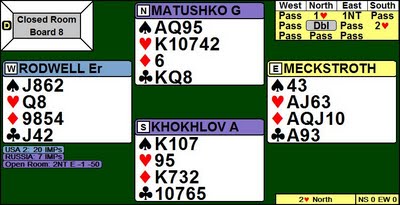
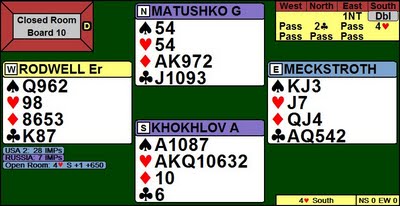
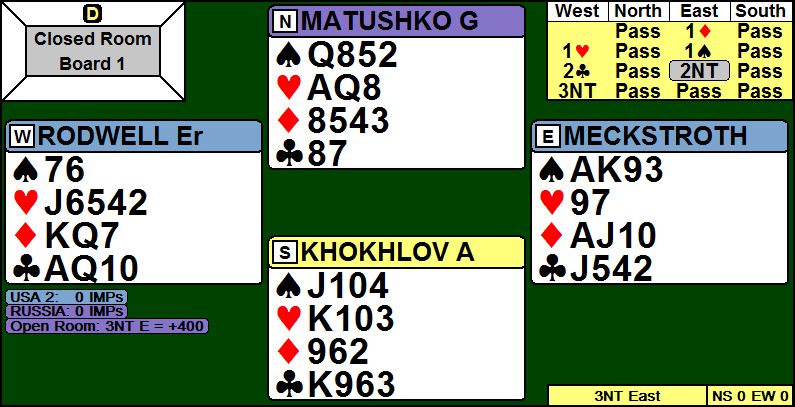
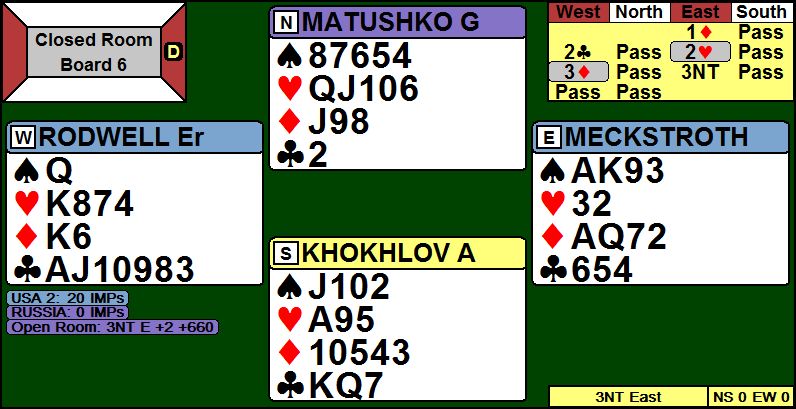
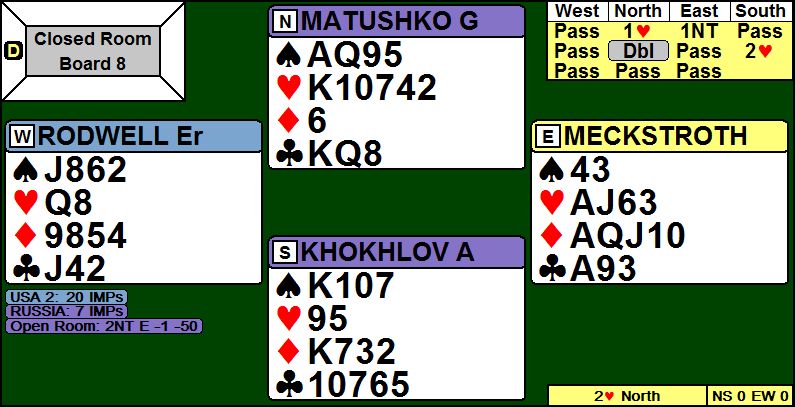
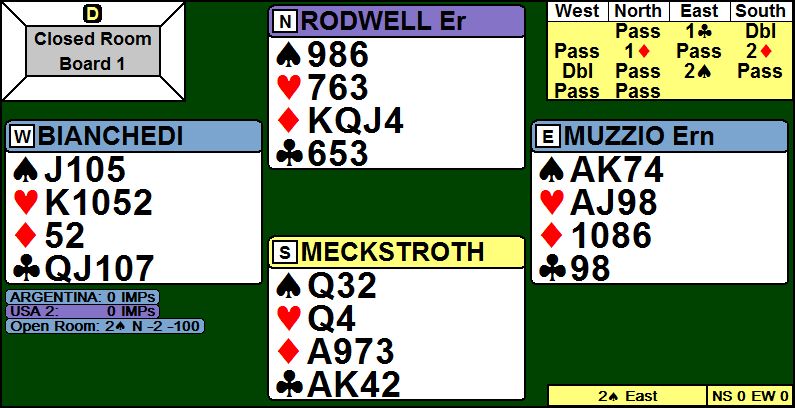
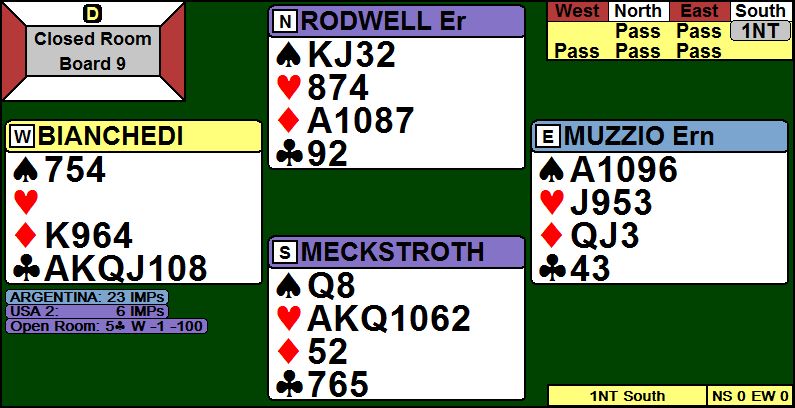
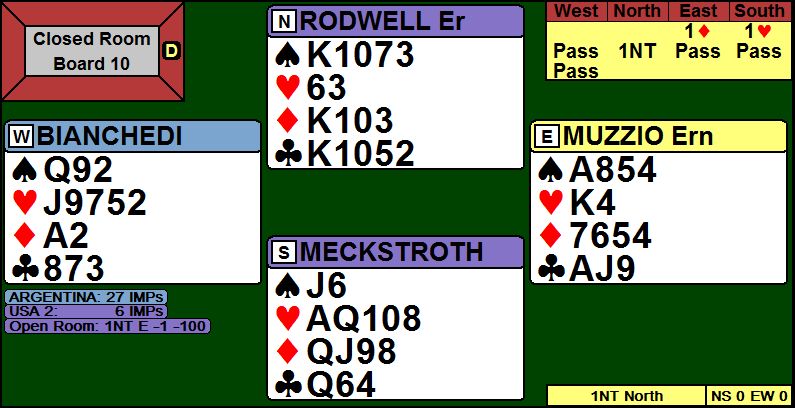
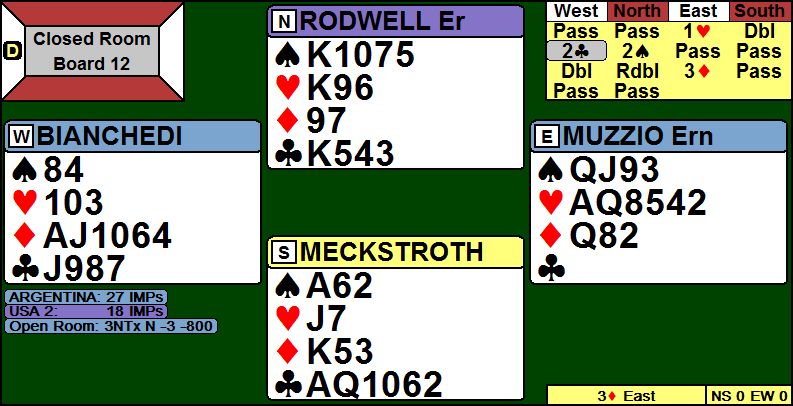
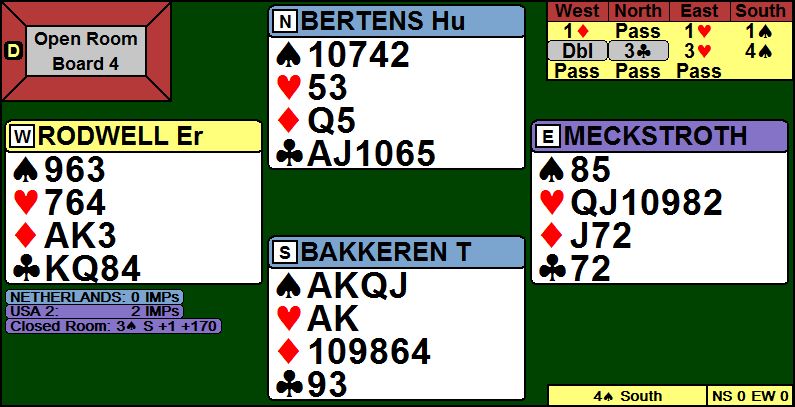
You can watch Meckwell and all the other stars of the Vugraph on a phone, as long as you don't mind them being a touch tiny. Here's one of this morning's matches on my new iphone:

.

.

.

.

.

.

.

.

.

.

.

.
Now for comparison, here is the iphone and part of the monitor running BBO on Windows:

.

.

.

.

.

.

.

.

.

.

.

.

Here is the iphone with BBO running in a browser, and I'm using Google's Chrome browser since it is quite fast:

.

.

.

.

.

.

.

.

.

.

You might notice that Meckwell's teammates are going for down 5 doubled, and we will discuss that not tiny -1400 in an upcoming post.

For details on trying this beta software:

http://forums.bridgebase.com/index.php?showtopic=31727

Some tournaments are considering a time delay in show the vugraphs:

http://forums.bridgebase.com/index.php?showtopic=32691

Fred Gitelman states:
I think it is safe to predict that the one and only reason we would have for making this change would be if a major tournament organizer (the WBF for example) said "introduce a delay or you won't be able to broadcast our events in the future".
I love BBO vugraphs, even on the phone if I'm away from a monitor, and if takes a delay so be it, but this will not come close to solving the security issues with wireless technology prevailing everywhere.

Saturday, June 20, 2009

Discussions

The USBF announced their decision in the Nickell team concern.

To quote the USBF site:

As a result of Dick Freeman's illness, and his inability to play in the finals to determine USA2, the USBF, in accordance with its General Conditions of Contest, named a Tournament Committee to review the circumstances and recommend a course of action to the USBF Board. Led by John Sutherlin, the Committee met, and unanimously recommended that Nickell-Freeman be permitted to remain with their team. The USBF Board unanimously accepted the Committee's recommendation, and USA2 in Sao Paulo will be the original six-handed Nickell team. We all wish Dick a full and speedy recovery. Bill Pollack, USBF President

imo, the General Conditions of Contest were clear, and this decision was the correct and proper one. If one believes that these conditions need to be updated, that is something to be worked on for the events of future years.

For a discussion, see both:

http://judy.bridgeblogging.com/?p=195#comments

and

http://bobbywolff.bridgeblogging.com/?p=68#comments

Sometimes the discussion tends to be harsh, with just a veneer of civility, but bashing out the issues will help in the long run. One thing is clear from it: we all greatly miss Edgar Kaplan.

--- ---

It is sad to see one of the bridge forums shuting down:

http://forums.bridgetalk.com/index.php?showtopic=4366

It is with regret that we have to announce that bridgetalk.com will be
closing down on 1st August 2009.

Sometimes people don't participate in forums or blog comments as the discussion can be strongly worded. That's just the way it tends to get sometimes. Here's some talk on a hockey site:
Your ideas are not silly and nonsensical because I disagree with them. In fact, there are a great many people I disagree with on a great many issues without considering their ideas silly and nonsensical. Your arguments, however, are silly and nonsensical, because, well, they fit the definitions of those words. They don't make sense. I've explained why. And I'm sorry if you've felt insulted by my criticism of your arguments and assertions. I feel that I've been entirely reasonable, however.

and,
your comments make you look like a complete fool. They should take away your account and not let you post on (site). When I read what you write, I just shake my head and laugh at you.

and the very, very common:
are you on crack?
Compared to what we can see on sports or poker forums, the bridge forums are relatively tame, and, almost all discussion has, at least, a veneer of civility. Rarely will an argument degenerate into an uncalled for personal attack, and even when it does, most quickly return to a debate about the issues and concerns. When you do see a direct personal attack, ask yourself, why is this person moving off the issues and concerns - what is the agenda here and why don't they want to debate the subject?

Having said that, the demise of the bridgetalk forums might be in part due to too much civility. If one looks at the some of the longer threads on BBO forums, or in a very long stream of comments on a blog, often the discussion is a battle between various viewpoints, with some expressed elegantly and others nastily. Perhaps it is the nastiness, and the resulting blood sport, that gets the attention. Bridge players are amongst the most competitive people you can find, and perhaps they are drawn towards the battles. If you do participate in the USBF discussion, feel free to cut n' paste the hockey forum talk above into your postings.

Friday, June 12, 2009

CNTCs

The Canadian Nisbet Team Championships (aka the Canadian Women's Team Championships) was won by the Nisbet Team:

Pamela Nisbet, Karen Cumpstone, Joan Eaton, Barbara Clinton, Kismet Fung, Susan Culham

Last year I wrote about how Pamela owns this event:
http://www.bridgematters.com/bridgematters/2008/05/here-are-last-three-winners-of-canadian.html

This year's team is a super strong six, and I have great hopes for their match against Mexico (July 10-12, in Mexico), and success in Brazil.

Speaking of previous winners of the team championship, we have two teams in the CNTC final littered with former champions:

1. John Carruthers, Joseph Silver, David Turner, Roy Hughes, Nader Hanna, Jim Green
2. Nicolas L'Ecuyer, Kamel Fergani, Darren Wolpert, Jurek Czyzowicz, David Grainger, Daniel Korbel

Even though the team rosters had Carruthers #1, and the other guys #2, I will pick the L'Ecuyer team to win the two day final – I was 3 for 4 in the quarters, and 2 for 2 in the semis, so just go to your local bookie, say you want to bet on the CNTCs, and he will say "what you mean, the Canadian Nisbet Team Championships are over!"

Wednesday, June 10, 2009

The Board

It was a stunning comeback, the ten boards in the middle of the last set were wild, and the focal point was "The Board" - this amazing board is already being discussed on BBO forums (as a lead problem), and I really don't need to blog about it, as you will see it all over the net, and then in any newspaper that has a bridge column, and in all the best bridge magazines.

It was the round of 32 in the trials for USA2, and the Diamond team faced the Ozdil squad in a match that would send one of them home. Ozdil (Melih Ozdil, Jiang Gu, Xiaodong Shi, Mark Lair, Jonathan Weinstein, David Yang) had been playing since the start of the round robin. In the round of 32 for the USA1 spot, they had beaten Lewis, and then Ozdil had overcame the strong Jacobs squad in the USA1 Round of 16, and finally lost to Fleisher in the USA1 quarterfinals, which put them in this USA2 match. Diamond (John Diamond, Eric Greco, Fred Gitelman, Brian Platnick, Geoff Hampson, Brad Moss) had been seeded into the USA1 round of 16, lost to the Rogoff team, won their USA2 Round of 64 match against Beatty, before getting to this match.

After three quarters, Diamond led 118-80 (USBF line score, vugraph gives 114-80). After three pushes, board 49 had both tables in game by South:


Hampson in 3NT got a club lead, won by the jack, and declarer worked the majors to get 9 tricks in.


In the other room NS tried the 4-3 fit, and declarer almost brought it in, but having to make expensive overruffs had him run out of the necessary trump spot cards.

The Diamond team were now ahead 128-80 with 11 boards to play. On the next board both tables got to 3NT.


Against Ozdil, where Lair had bid 3S to show short spades, three hearts, and both minors, Hampson led a heart honor, ducked, and continued with the other heart honor. When North got in with a diamond, he played the heart king, assuming his partner had better hearts for the lead. After establishing a second diamond, and a with a later club finesse, declarer had 3Ss+2Hs+2Ds+2Cs for 9 tricks.

At the other table, Gitelman-Moss use the 2D transfer to show hearts, or to show a game force with both minors (2S showed this, 2NT was no minor, 3D showed longer clubs). North aggressively doubled 2D to get a diamond lead, and EW didn't have the machinery to play 2DXX, instead reaching 3NT.


South led a diamond to the queen, and North switched to the spade jack, won by declarer. The club jack was covered by the king and ace, and now Moss could play a club to the 9 - if South wins this declarer has 4Cs+3Ss+1D+1H at least, while if South ducks this declarer has 3Cs+3Ss+2Ds+1H at least. Instead Moss played the club queen from dummy, and the bad club split meant the play was a mess. He misread the end position, partly to the double on just 4Ds, and was down 1 for 10 IMPs to Ozdil,

And now The Board:


In the Open Room Gitelman and Moss got to 6H. I'm not sure what 4NT was - it might have been intended to show long diamonds and secondary clubs, but used here to deflect South from leading clubs against 6H. It could have been some form of Blackwood, but it had a void, and Moss's reply to 4NT doesn't look like a Blackwood reply of some sort. Against 6H, a club lead would get +100, anything else -1460. Instead South bid 6S, a phantom sacrifice if he would have led a club, and gave up -1100. How many IMPs were on the line for that -1100, instead of +100, or -1460?

The answer is not many.


In the Closed Room, Lair opened 2C with playing tricks, and the auction quickly reached the grand. Greco doubled, and later told the table he was hoping that this might steer West into bidding 7NT if some other hand was held. Instead East redoubled, and South had to lead. Double equals dummy's first real bid suit, right? South led a diamond, and was -2940. He told the table he was leading a spade if no double. 1840 was 18 IMPs. 3040 (2940 + 100) would have been 22 IMPs. 1480 (2940-1460) would been 16 IMPs.

The next board was 5 IMPs to Ozdil for 2H making against 2H down 1, the key play being Ozdil ducking a first diamond play with Axx, and able to later give partner, who had xx, a ruff.

Then on the next two boards, just 1 IMP to Ozdil for an overtrick, one board being a 21 point 4S game, the other a 29 point 6S slam. This match was not about being conservative.

Next on board 55, in Open Room, Gitelman and Moss settled into 4C, down 1. North had bid 2H over West's double to show a good raise to 2S, only 6 points but it was shapely.


In the Closed Room, the same 2H bid (here, described as a constructive spade raise), found East taking a shot a 3NT, and South taking a two-way flyer at 4S - it might make, and it might be a decent sacrifice.


Lair pulled out a X to give this contract a big ticket for speeding. -800 was 14 IMPs to Ozdil, now with a small lead in the match.

Board 55 found both EWs in 1NT, doubled of course in this match. Yang led a heart away from AQxxx and got -300, while Greco tried a diamond from J94, and the tempo cost a trick, just -100, and 5 IMPs to Ozdil.

On the next board, both tables were in 3NT. In the Closed Room, it was by East, and it was down 2 on a diamond lead.


Hampson remarked to Lair that 3NT would make from his side, and Gitelman tried that in the other room.


On a heart lead by North, Gitelman ducked in dummy, which seems natural, but now South won the heart king, and fired back a diamond. Again Gitelman ducked an ace, and South played another diamond to sink the contract. Still down only one was 3 badly needed IMPs back to the Diamond team.

Next came the final nail. In the Closed Room it looked like the stop in 3NT with 31 points would work, with the red suit honors not well placed.


However 3NT made 6 on a high diamond lead by West. In the Open Room they reached 6NT:


Generally I like passive leads against 6NT and 7 level contracts. However the score at the start of the set, and 6SX for 1100 at this table seemingly a phantom sacrifice, and the auction, gave it the reek of a shot at slam, and Gitelman went with a high diamond lead. He lost the first diamond trick to the ace, took the diamond ten with the queen at the second trick, and returned a diamond. With the bad spade split, declarer had 4Ss+3Ds+3Ds+1H. However West had to keep a spade, East a club, and thus neither player could guard hearts when the hand was played out (follow the cards with handviewer if you want to see how it all worked). The double squeeze was worth 13 IMPs for the victory. It was a stunning set of ten boards.

Tuesday, June 09, 2009

Quant this

Thinking about Jonathan Weinstein's line of work (see previous post) and team trials, I decided to do some quant work on the Canadian open team trials, with the round robin ending today. The quant theory I used was that teams in bad/awful/impossible playoff position tend to care less about their final day bridge, while teams in the hunt tend to bear down (the careless/bear theory). Factoring in the positions, that gives us these 8 playoff teams (in team number order, not placing order):

1 Carruthers
7 Ballantyne
13 Marcinski
15 Gamble
16 Bart
17 Steinberg
20 Rayner
21 Todd

These are the quant Pendicton predictions after day 3, without considering the day 4 results here:

http://www.cbf.ca/BWeek/09files/BWeek09_CNTCArr4.html

I'll update this post tomorrow with the playoff picture, and I hope the quant results are not perfect, as there are some teams I would like to see playing Wednesday.

Update:

The teams, in finishing order, with VPs given:
1 Carruthers - 395
2 Rayner - 391
3 Bart - 389
4 Todd - 387
5 L'Ecuyer - 384
6/7 Thurston - 375
6/7 Janicki - 375
8/9 Marcinski - 363
8/9 Gamble - 363
The 10th team had 362 VPs

Since Gamble had beat Marcinski 25-5 in VPs in the round robin it would be Gamble in the playoffs?

No, the first tie breaker is on wins - here's the two-way tie-breaking forumula:

a) All matches played will be scored on the basis of:
WIN - 1 point; TIE - .5 points; LOSS - 0 points.
b) The result of the match between the tied teams.
c) A playoff between the tied teams. The playoff must be five boards. If still tied after five boards, continuing sets of five boards will be played until the tie is broken
This put Marcinski is the playoffs, and now the top team could pick any of the bottom 4 to play against, and then the 2nd team could pick any of the bottom 4 still left for their match. When a team is picked, they want to say, at the bridge table, "picked us, eh?" (use google Canadian translation), "well think again eh!", and then they bid a toonie of Canadian slams.

Let's go with the teams running hot for the quarterfinals:

Carruthers to beat Janicki (final: 142-129)
Thurston to beat Rayner (final: 142-154)
Marcinski to beat Bart (final: 167-102)
L'Ecuyer to beat Todd (final: 138-111)

Update: I posted the final scores above - it was 3 out of 4 in the quarterfinals - Linda was also 3 out of 4, and I'm sorry her team is out in the CWTC.

In the open semis:

Carruthers takes out Rayner
L'Ecuyer takes out Marcinski

Yes, this is picking against our IMP league teammates, but a blog has to pick the team with the blogger (Daniel Korbel), correct? Except yesterday the Bart team with a blogger (Michael Yuen) was picked against, but the blog was overruled there.
Must Reads

It's not easy being a Weinstein playing in the US trials - Steve, Howard, or Jonathan. Jonathan is playing the 4th of 6 segments right now on the BBO vugraph, and he is listed as Howard as I type this (but has since been corrected).

Jonathan's blog is at:

http://jlwbridge.blogspot.com/

Check out his older posts too, such as is posting that begins:

Have you noticed that your partners and opponents (not you, of course - you are a very sound bidder) seem to be more likely to have 14 hcp than 17 for a 15-17 notrump? …

Jonathan is a prof at the Kellogg School of Management (NorthWestern U) and one of the areas of his research is game theory. His bridge blog is not yet part of the Kellogg Faculty Blogs.

For the online vugraph, one of the best commentators is only 13: Adam Kaplan. He has quite the beer collection on his blog (no, not actual beer beers, but winning the last trick with the diamond seven). 2 of the 40 people who voted in the favorite system poll have voted for SAYC so older folks must read his blog too. Adam's blog is at:

http://precisionpass.blogspot.com/

Especially read the hand given in Palm Beach Gardens - Part 2.

Saturday, June 06, 2009

True Expert

Monday night found us playing an IMP league make-up match with playoff implications. Here's a problem for you:

S: A987
H: KJT87
D: 32
C: Q4

It goes 2D weak on your left (could be a five card suit), 2NT by partner, pass by RHO.

You bid 3D, Stayman in your methods. LHO passes, and now partner announces 3D as a transfer, and then bids 3H. RHO passes, and then you bid ?

The expert with the above hand was one of our opponents, and what he did next showed that he was a true expert. He bid 4H, bidding as if he never heard the announcement. He knew that announcements are for the opponents only, and he could not use that information to take another course of action.

Notice that he could easily have bid 3S here, making it look like he transferred to hearts, and then bid spades naturally. This would get his side to the best contract, while bidding 4H over 3H risked playing in a 5-2 fit, with perhaps 3NT better, or having a 4-4 spade fit. Nobody would be the wiser - the only person who would knew that he bid 3D as Stayman could just keep quiet, and his team's playoff chances would still be alive.

Instead he took the right action, and even though I said nothing at the time, I made a mental note: "Now there's a true expert".

The actual board was a push (they had a 5-3 fit), and after a lot of IMP exchanges we won the match which found us in the playoffs on Wednesday.

In the first half, I had:

S: KQT875
H: Q75
D: K83
C: 2

I opened 2S, a weak two that could be a five card suit. LHO and Karen passed, Karen usually not having 3Ss as we bounce the bidding with a fit. RHO bid 3C and played there, making 5 on our poor defense.

At the other table, holding this hand was Jurek Czyzowicz. On the same auction (but with 2S promising 6), he doubled 3C for takeout. This got partner Steve Brown to bid 4S with:

S: A2
H: AK932
D: 65
C: T876

That was 10 IMPs to their side, and we were well on the way to our playoff exit.

Jurek, Steve, and our teammates Waldemar Frukacz and David T. Willis all start play in the Canadian Bridge Championships today. Good luck to all. Rosters are at:

http://www.cbf.ca/BWeek/09files/BWeek09_rosters.html

Linda's look at handicapping the team event is at:

http://linda.bridgeblogging.com/?p=1158

On Friday night Karen and I won a ACBL BBO speedball that was notable because on board 2 we had handicapped our score with a -790 and -13 IMPs as result of our poor defense (tm).

Say the following occurs at your local club. Both opponents are very successful players. You finish a board with a good result for your side thanks to frisky bidding, and then one of the opponents calls for the TD (tournament director). The TD arrives but immediately goes away with the opponent and they have a discussion away from the table. The player silently returns, while the TD goes quietly back to their computer. Later, in checking the score comparisons, you find the result of the board you played has been changed to A+ (average plus) for the opponents.

This occurred, but =at a place that prefers to remain undisclosed, but not located in Canada=. The two opponents were US stars. While quiet handling problems can be cool in many cases, I think open communication is important when score adjustments are in play. =Sadly the place where this had happened has asked that everything remain private =

Update: the parts marked between = = are later updates to reflect the wishes of the place to remain private. If they had read the book, Brand Bubble, mentioned in this post:

http://www.bridgematters.com/bridgematters/2008/12/what-good-are-experts-expert-squeeze.html

they might realize that what consumers need to see is this loop:

feedback (good/bad) -- brand acknowledgement - brand improve/change/fix/update/repair

If a brand attempts to close down or hide this cycle, anywhere in the cycle, they lose consumer trust. This does not mean that the brand loses consumers, but just that consumers will not trust them to do the right thing. For contrast, see this Best Buy short clip titled "The Marketing Capability: the Future is Digital":

http://www.youtube.com/watch?v=-rTzIAWI4Ms

= end of update =

We now have a great set of days of vugraph to look forward to. The schedule is at:

http://online.bridgebase.com/vugraph/schedule.php

Thanks to all involved with these presentations, and in particular the BBO folks and the tireless never-sleeps coordinator Roland Wald. Once I get the lawn cut (it is way too long), I hope to pitch hit as a commentator for a less popular event, the type where my typos are forgiven and frisky bidding is common place.

Saturday, May 16, 2009

Two Clubs: Artificial, Strong, Forcing, and useful!

I received a question about Two Club (2C) openers as strong, artificial, and forcing.

Let me walk through the 2C opening and structure concerns:

1) 2C: Strong, Artificial, Opening

Often played as 22+ balanced or any game force. It does not come up enough: one is not getting sufficient value out of the bid. Adding a weak option, such as a weak two in diamonds, gives more value, but a transfer preempt in diamonds tends to assist the opponents as much as it hurts them - it gives them extra options into the bidding with a major or majors.

Adding near game forces work if the suit is a long major, but if the longest suit is a minor it doesn't work as there is not enough room to investigate all contracts (major/notrump/minor) and still stop short of game if necessary.

Adding more balanced hands works well, if we can have the structure for it. It can have a great impact on the majority of opening hands - how? - take this notrump ladder:

1X: 11/12-14
1NT: 14/15-17
1X: 18-19
2NT: 20-21
2C: 22+

Now let's adjust to:

1X: 11/12-13
1NT: 13/14-16
1X: 17-18
2C: 19-20
2NT: 21-22
2C: 23+

In the second structure, if opener is minimum balanced it is more defined: 11/12-14 becomes 11/12-13. This allows one to have better auctions (e.g. knowing when not to invite or slam try), and it allows more 11s to be opened than with the wider 11/12-14 range where the 11 counts needs to be truly exceptional.
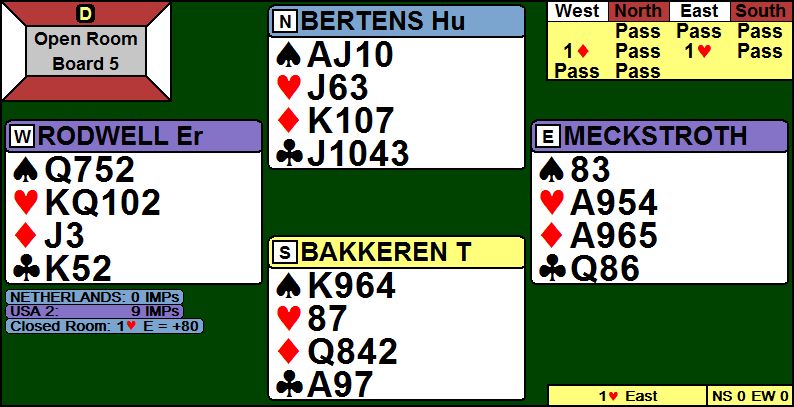
The 13/14-16 1NT is more frequent and opening NT is good for you.

The 17s now have to bid 1X-1Y;-2NT, but usually either one has 23+ combined points and 2NT or higher is a good spot, or you can land in a three level contract (recommendation: play transfers over the 2NT rebid) or the opponents enter the bidding. A nice feature is that 1X-1M;-3M can include the 17-18 balanced (or less points but more shapely hand), while if 1X includes 18-19 balanced, usually the extra point gets the 1X-1M;-4M space eating auction.
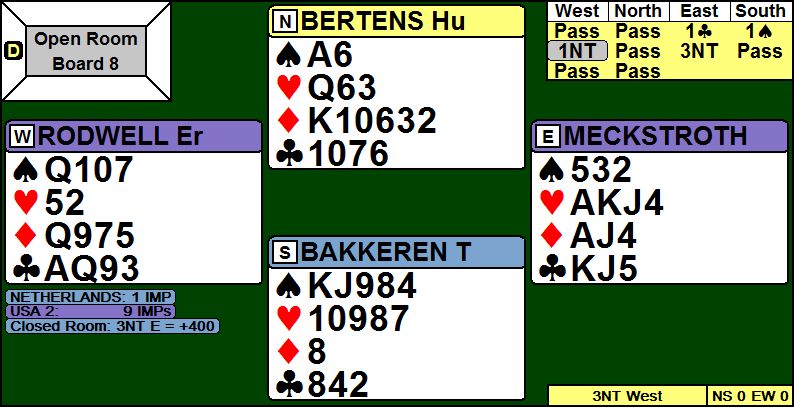
21-22 is a better range than 20-21 for opening 2NT, since that extra point allows responder to use Stayman on weaker hands, and deceases the chances of just starting and ending in a 2NT no-hope contract.

For the 2C opening, 23+ is a better range than 22+, since a 22-24 range rebid is too wide. If 22-24 is a 2NT bid at some point, responder will need to consider it a 22 since these hands will occur more often than the 24s. Thus a 22-24 range treats 24 as 22, and will sometimes miss the best spot. In the best of designs, 1NT bids (opening or rebids) would be 3 point ranges, and 2NT bids would be 1.5 point ranges, but using 1.5 point ranges requires a lot more delayed sequences to 2NT and plenty of partnership discussion on how to split that half point - for example what is a good 18 compared to a bad 18.

In summary, adding 19-20 balanced into your 2C opening can have a big impact across the board for your system - it even changes which 11 counts you can open.
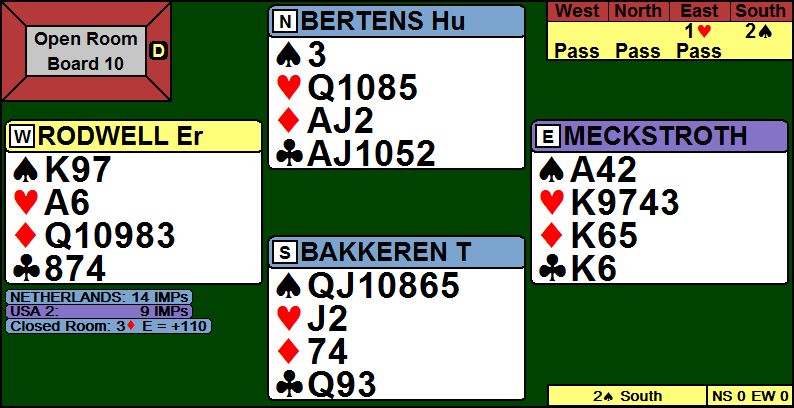
If you open 2C with 19-20 balanced, should the 2C opening handle 19-22 balanced or any game force, (2NT being 23-24) or should 2C handle 19-20 balanced, or 23+ balanced, or any game force? I don't have a strong opinion, but in using the latter we have found that in competition opener's pass will usually show precisely the 19-20 balanced hand, leaving the partnership well placed for further decisions.
--- ---

2) 2C-2D

In a February 09 Bridge World article, Powerhouse Openings, Danny Kleinman confirms my opinion that since "only two diamonds does not shut out any of opener's intended rebids; therefore it should be the usual action" - he goes on to explain that 2H can be a wide ranging positive in hearts, as it will not eat any room either. The Bridge World article seems based on this article on Kleinman's site:

http://dannykleinman.com/Documents/RESPONDING%20TO%20AN%20OMNIBUS%20TWO%20CLUBS3.pdf

(There the phrasing for the 2D waiting response was "Responder's first priority should be to avoid preempting opener's intended rebid".)

A popular treatment now is to play 2C-2H as "super negative", or "bust", or 0-3. This tends to be the extend of the agreement, and we often see break-in-tempo auctions like 2C-2H(bust)-?, and finally after a 1 minute trance and looking to the ceiling for system notes, a 2NT bid is tentatively placed on the table. After 2C-2H(bust), are 2S, 2NT, 3C, and 3D all non-forcing? Does opener pass 2H with non-forcing hearts, with the risk of finding responder with a heart fit and a useful shortness? With a game force must opener jump the bidding or bid 3H to ensure game is reached?

To avoid this super negative mess, tend to use 2D waiting with most hands, and we will look at an exception next.
--- ---

3) 2C-2H, 2C-2S

These are usually positives. If they have stringent suit quality requirements (e.g. two of the top three) they don't come up very often. If they are played more free-wheeling they are useful, but using a 2D waiting response would be workable on the hands as well.

An approach used locally (by former Canadian champ Ed Zaluski) was to treat these bids as natural busts - in the version I like these are five or longer suits with 0-3 HCP. It turns out what really works here is the inference from not using these bids. These natural busts (btw sorry to those who searched for this phrase and found no pictures here) don't pop up that often, but the sequences that start with 2D waiting and then rebid the major works well - e.g. 2C-2D;-3D-3S showing 5+ spades, 4+ HCP.

These bids really mesh well with the 19-20 balanced hand approach, as the partnership can stop at the two level on hands where standard partnerships must end up on the three level or languish in the wrong contract at the one level. Even cooler: after the 2C-2D;-2NT rebid by opener showing 19-20 balanced, if responder transfers to the major, opener can super accept both with a fit (by bidding a new suit or jumping in the major), or super accept with no fit by bidding 3NT, to show a maximum and good playing value.

--- ---

4) 2C-2NT, 2C-3C, 2C-3D

When used as natural positives these bids consume too much bidding space. Whenever we had the auction 2C-3D, either opener would rebid 3NT and we sometimes missed a nice slam, or opener would skip 3NT and we missed the best spot on many hands. The waiting 2D response gives the partnership the room for both players to show hand types. For the 2NT, 3C, and 3D responses, this is recommended:

2NT: 5-5+ in the majors, 5+ HCP, game force
3C: 5-5+ in the majors, 0-2 HCP, only 4C and 4D forcing.
3D: 5-5+ in the majors, 3-4 HCP, only 4C and 4D forcing.

Again the purpose is not to have these bids come up, but have the inference that these hands are not possible for the 2D waiting bid.
--- ---

5) 2C-3H and higher

Often these are defined as highly specific hand types (e.g. seven card one loser suit) - these are useful for bidding contests but in real life they will not come up until the cobwebs are all over the system notes. To avoid wasting memory cells, just define these as natural slam tries with a very good suit, forcing to game in the same strain (using 2C-3NT to show diamonds).
--- ---

6) 2C-2D;-new suit

Before we get to the Kokish/Birthright 2C-2D;-2H structure, the key point here is we want to find 4-4 major fits. Thus we play that 2C-2D;-2H/S will be bid with 4 or longer in the major, unbalanced hand, unless holding 4Hs, longer clubs and fewer than 4Ss. 2C-2D;-3D will be natural, without a four card major. 2C-2D;-3C will not have 4Ss, and over 3C responder can bid 3D re-waiting (checkback style, asking if four hearts or three spades). With 4-4 in the majors, unbalanced, opener starts rebidding with 2S, since 2H will be doing double duty with balanced hand types.
--- ---

7) 2C-2D;-2NT

We need this for 19-20 balanced if we are including this in the 2C opener. 2NT structure is on.
--- ---

8) 2C-2D;-2H

Following a Kokish type structure (what he calls Birthright, but let's stick with the name Kokish in proper admiration), 2H will be either hearts or balanced, either:

a) 4+Hs, unbalanced, not 4 spades unless longer hearts, and if just 4Hs has longer Ds or 1-4-4-4 exactly;
b) balanced 23+ (or if your splits are different, balanced 21-22 or 25+).

We take advantage that the 2D waiting response will not have a weak hand with a five card or longer major:

After 2C-2D;-2H-?
--2S: No five card major, no five card minor if 8+ HCP.
--2NT: 5+Ss, 4+ HCP.
--3C/D: five card minor, 8+ HCP.
--3H: 5+Hs, 4+ HCP, not 4+Ss.
--3S: 5+Hs, 4Ss, 4+HCP.

This works since the space consuming bids of 3H and 3S will either hit a heart fit and/or a balanced hand, and the bids of 3C/D are very close to slam going.

After 2C-2D;-2H-2S;-?
--2NT: 23-24 balanced, system NOT on, since transfers not necessary (both majors already bid, responder does not have a five card major) - 3C/D/H/S are all natural suit bids, game forcing.
--3C: Stayman-like, either 25+ balanced with a four card major or 5+Hs & 4+Ss game force.
--3D: 4+Hs, 4+Ds, unbalanced, game force. Responder now bids 3H with exactly 3Hs.
--3H: 6+Hs, game force.
--3S: 5+Hs, 4+Cs, game force.
--3NT: 25-27 balanced and no four card major (with 28-30 balanced bid 2C-2D;-3NT).

The key wizardry here is 2C-2D;-2H-2S;-3C as a Stayman bid - if responder bids 3D (no four card major), opener can rebid 3NT to show 25-27 balanced, or bid 3H/S naturally. Since 3C handles the Hs&Ss hand, 3S is used with Hs & Cs.
--- ---

9) 2C-2D;-2S-2NT

We use 2NT to show exactly 3Ss. With 4Ss raise to 3S or higher, and with less than 3Ss bid naturally, bidding a four card minor if necessary.
--- ---

10) 2C-2D;-3H/S
These bids are available for special use, such as showing a long suit with exactly 9 tricks, non-forcing.
--- ---

Many of the above design principles are found in the BRASS approach here:

http://www.bridgematters.com/brass.pdf

Once we started playing BRASS I stopped cringing at our 2C openings and now it's an essential part of our system design.

Wednesday, April 29, 2009

Is it all gold?

I had a chance to hold an Olympic gold medal last week and I was impressed by how heavy it is - I thought it would be some trinket but instead it is a solid circle of metal. I was told that it was pure gold, but the Internet says it is approximately 244 grams of silver covered by 6 grams of gold (that is some cover-up - the last gold medals made of all gold were for the 1912 games). That still is a nice take-home prize for winning an event at the 2008 Mind Sport Games, if they used the same medals - or for the 2002 Grand Prix in Salt Lake, won by Canada, if they handed out Olympic medals.

The first modern Olympics were in Athens (1896), and recently there was some more Gold in victories there - not Olympic Gold but ETM Gold, the bidding system. The pair of Nikos Delimpaltadakis & Dimosthenis Dionysopoulos were part of the winning team of the Greek National Teams Championship, and they also won, as a pair, the Athens Matchpoints Championship, and came in third in the National Matchpoints Championship. Given they were in a process of converting to ETM Gold just this fall, these are solid gold results!

If you read Greek you can read the results here:

http://bridgepartner.blogspot.com/2009/03/panellhnio-prwtathlhma-omadwn-mpritz.html

Let's take a look at how you can look at those results when you don't know the language. First do a search on the web page you are interested - in this link I've used the main page of the above site:

http://www.google.com/search?hl=en&q=http%3A%2F%2Fbridgepartner.blogspot.com%2F

Now Click on "translate this page" and the page is no longer seemingly mathematical formulas.

Here is an example of translation already done, with a picture of the winners:

http://translate.google.com/translate?hl=en&sl=el&u=http://bridge.com.gr/news/2009/04/12/prwta8lhma-attikhs-2009/

At this point you might want to switch to ETM Gold but hold your horses!

Last weekend an Icelandic Teams championship was won with one pair, Sveinn Eiriksson & Hrannar Erlingsson, using the ETM Spry system.

If Google would translate the Icelandic language, you could read it here:

http://bridge.is/mot/gomul-mot/2008-2009/sveitakeppni---urslit-2009/

Swan has the final boards and IMP exchanges here:

http://www.swangames.com/rama/eventinfo.php?eventid=283222

This summer Nikos Delimpaltadakis will be playing with Sveinn Eiriksson in the Washington NABC's - this again demonstrates that the NABCs are no longer a North American only Bridge Championship, but a world event hosted by the ACBL, albeit without gold/silver metals.

Should they play Gold or Spry?

Spry is faster to pick up, but now requires a small adjustment to play in ACBL general events. 1D as a "catch-all" opening is allowed in ACBL events, but they no longer want "catch-all" to end up just catching one defined suit - in Spry 1D shows spades. Thus it is necessary to incorporate other hand types into 1D so that it catches more that just spades. One adjustment is to play 1D as it is in Spry, or having an eight card minor with 13-14 points. Please note that Spry does met the ACBL regulations as written, and this adjustment is only necessary as there has been a selective interpretation of the regulations that appears not to have used Google translate on "catch-all".

Gold is more sophisticated, and provides more depth in agreements - this can be counter-productive for a new partnership: do you both remember what is on page 82 and agree with it?

The key success factor is how comfortable both players will be with the system picked. That seems simple, except here we have one partner who needs to adapt to a new system, while the other has to teach them how they want the system played. This teaching aspect is very important too, since how a system is portrayed on paper is often not how it is actually used by a skilled partnership.

For other partnerships reading this post, you might think: "Great, we just pick Gold or Spry, which ever we feel most comfortable with, and it's off to the races".

Not so fast.

Systems assist partnerships in doing well in events, but they are not key factors in themselves. The events noted above were won by very strong expert players. If the players were not very strong experts, the system would not have been enough to put them in a winning position.

If I was given Lance Armstrong's best bike, sadly I still could not compete in any serious bike race, even with the aid of this marvelous technology (Armstrong accidently twittered his email address this week to 700k of us, so I could email him about his bike). The bike assists Lance Armstrong in winning events, but it requires a very strong cyclist to use it to win.

Playing any particular system does not make you instantly competitive in every event. To use a system effectively, first you must be already competitive in the event, able to play well against the participants, and then the system can assist you in winning. Use systems like Gold and Spry to give you an edge, but don't never expect a system to take you from last to first.

Thursday, April 16, 2009

Magic

Jeff Smith and Ross Taylor won last Saturday's top flight Open Pairs in Toronto, as reported by Linda here:

http://linda.bridgeblogging.com/?p=1054

A hand that Ross Taylor played many years ago had a profound effect on me, even though I wasn't there to see it played and it was never published.

I was in a school cafeteria when my regular partner shows up to give me this hand, saying "Ross Taylor made six hearts on this on a trump lead, guess how?"

He had just seen Ross play the hand in a money game at the university student association. We were both bridge neophytes and watching the experts play the game was one way we tried to get better.

I studied the hand but I kept seeing two club losers. Finally I gave up and said how?

Simple I was told - draw trumps, cash club ace, eliminate spades and diamonds. The opponent with Kx of clubs had not unblocked, so when Ross played a second club, the opponent had to win, and give both a ruff-n-sluff and dollars.

This was magic to me - obvious losers could be made to disappear by sleight of hand. Spurred by Ross's play, I spend many hours reading books on advanced declarer play and the magic secrets that are now so engrained it's as if I always knew them. Even though at the time I should have been studying for my courses, that knowledge no longer remains useful. Instead it turns out the hours seemingly misspend were worthwhile, as almost every day for years I have used the magic of our game, as first shown to me by Ross Taylor.

Sunday, April 05, 2009

A Great Week

It was a great week for bridge blogging. I'm thrilled when articulate and talented bridge players start blogging, especially if they are relatively young since that means they may continue to bridge blog and/or publish for many decades.

One new blog is by 30-something Sartaj Hans:

http://theimpchimp.blogspot.com/

He already has a masterpiece of a posting:

http://theimpchimp.blogspot.com/2009/03/fifteen-thousand-dollar-question.html

Playing a $15K hand against Meckwell and then discussing it with Versace! Wow!

Returning to active blogging is 22 year old Justin Lall:

http://justinlall.com/

A terrific feature of Justin's new site is you can ask him questions, and the following post on matchpoints tops n' bottoms is a must read:

http://justinlall.com/2009/04/03/ask-justin-3/

At the Masterpoints Press http://www.bridgeblogging.com/ site, Linda and Ray Lee continue to assemble a wealth of content. They have now added the "Aces on Bridge" column as a blog, and Linda has added a "Best of the Blogs" section (http://www.bridgeblogging.com/?page_id=143). One expects that we may see more "curation" happening in the world of online bridge content.
Separating the wheat from the chaff, assigning editorial weight, and -- most importantly - giving folks who don't want to spend their lives looking for an editorial needle in a haystack a high-quality collection of content that is contextual and coherent.
(From: http://www.businessinsider.com/can-curation-save-media-2009-4)

Before curation can save media, original content needs to save media, and this last week was a great one for the bridge community. An added, cough-cough, plus for me was that I had bronchitis and reading was more worthwhile than nothing-to-sneeze-at writing.

Curation editor: please insert seamless segue here to transition to the next part (and please give me bonus points for using transition as an intransitive verb).

One of my favorite holdings in notrump contracts is Jxx opposite xx.

Yes, that is not much of a stopper, but if they don't lead that suit it can function as a virtual stopper.

Here's a hand I played a while back in 1NT (14-17) as West at matchpoints.

.

.

.

.

.

.

.

The lead was a small heart - I won the heart king and played a spade to the jack. North continued hearts, and I drove out the club ace. The opponents played hearts again, and I ran the clubs. Now I still had the same seven tricks I started with (3 hearts, 3 clubs, diamond ace), but the early spade play had left the opponents with the wrong impression of what was necessary to keep, allowing me to score an overtrick for a 90+% score.

Wednesday, April 01, 2009

Twit for a day

The New Liskeard regional committee is having an emergency meeting as I blog this.

In the Stratiflighted (A/X/Z) pairs yesterday, after the first round in the evening a player twittered "I made 6S on board 18". Even worse the player was using software that automatically posted status updates to Facebook from twitter.

The next three rounds proceeded as expected, all three pairs making 6S, two just opening the bidding there, while the third pair, the "2unders", decided to test their system before landing there (for you system fans, the bidding was: 1D-1NT;-2D-2H;-3D-3H;-4C-4D;-4NT-5C;-5NT-6C;-6D-6H;-6S and neither player was sure of what the bids meant).

Meanwhile the popular BridgeBuoys blog examined the hand, and posted a rebuttal, noting the slam is down on the lead of the jack from KJ9 of diamonds.

Thus in the next round 6S went down, and the aggrieved pair called the TD, claiming misinformation: 6S was obviously not making. When their opponents mentioned the latest RSS feed, they were loudly accused of not pre-alerting the opponents to this. This immediately produced a "war of twits" about the issue, and things got so heated (i.e. tweated) that some team arrangements got cancelled.

Now all this is usual for a bridge tournament, but this time the TD was fed up! He called for everybody's attention, said that all the TDs were tired of being called to the table, and announced that starting tomorrow (today), TDs calls must be made with a twitter for "td pls". You can imagine the subsequent uproar on Facebook! Even the player stuck on Myspace got upset, and several others made lengthy pleads on YouTube, set to music of course. An email to Memphis got the opinion that if regionals just stuck with Bracketed KOs, the problem would not have arisen in the first place.

The regional committee is now in a bind: today they had planned to switch to the new TD app on the iphone (the one that uses the GPS to determine table location of the call, and not the one that turns the iphone into an orange card), but may have to delay it.

Friday, March 27, 2009

Vandy Lead

Fred Gitelman at the end of his comments about the Vandy Lite posting, suggested using BBO's handviewer program. Let's give it a try here, comparing to pictures.

You have:

.

.

.

.


And the bidding is:

.

.

.

Or, the same hand/bidding with handviewer:


What do you lead?

I would like to mention some nice people I know that finished first in their ACBL categories given in the April ACBL bulletin: Heather Peckett, Michael Myers, Claire Zeitoun, and Allan Graves. Nice can finish first! - the other players who finished first may also be nice, I just don't know them personally (e.g. Gavin Wolpert is a great guy, but doesn't update his blog enough for me to be aware of the latest about him).

Also in the April bulletin, Karen Walker continues a terrific new series, "Improve your opening leads", and Jon Shuster writes about Transfers opposite overcalls (TOO - opposite partner's overcall "all bids except for raises, spade bids and 3NT are transfers" including double and redouble).

On the hand above, did you find the lead Alan Sontag made?

Here is the full hand:


.

.

.

.

.

.

If you lead anything but a diamond, 3NT can be made with a club finesse. A diamond lead resulted in down 7!

If you are using TOO, perhaps the West hand could double as a transfer to diamonds, but then does North still bid 3NT?

I tried to embedded the handviewer version of the hand, but the blogger software converted all the (straight line character) in the lin format to nothing, and I can't even link to anything with that character in it. Here's an attempt to link to handviewer without going back to blogger "Compose mode":

Link to handviewer

Now without going back to compose mode, here is the handviewer version:


This seems fine except I have to edit completely with html, which is [not pleasant].

Thursday, March 26, 2009

Playoff drama

I was under-the-weather for yesterday's IMP league playoff match, and even more under-the-weather today so forgive the mistakes, typos, and drivel you are about to read if you don't stop right HERE.

We started the match down 1.75 IMPs, due to a small loss in the round robin. We played the boards out of order (sharing with the other three tables), and we had some verbal fireworks when we reached board 1. On the previous board, it had started 1NT(RHO, 15-17, unannounced)-P-P-Double, and after Karen's double (10+, a minor OR both majors OR big), I played in 2C making +110. The opponents now didn't pull their cards out for the next board but instead had a discussion of rescues over balancing doubles of their strong 1NT. I didn't think that was likely to happen again in the match but said nothing.

We reached 4H on this layout by 1H-4D(splinter);-4H:
A9653
QJT
K9752
84
AK964
KJ64
84
(some hands are rotated)

The lead was the spade ten and I ducked to improve communications. The ten was overtaken by the jack, and the spade seven was ruffed by LHO. He returned a diamond which I ruffed. I was fairly certain the club ace was onside, so I ruffed a spade with the heart nine, and led a club up. LHO popped the ace, RHO following with the club queen, and LHO continued another diamond. I ruffed this and started to think. LHO gave me an intense "what are you going to do next" stare. Both opponents had taken considerable time on their plays after the opening lead, and now it was my time.

After a few minutes, the opponents called the TD to complain about the time I was taking. Karen mentioned that they didn't even start the board on time. The opponents explained that their discussion had only taken 30 seconds, while my tank had lasted seven minutes. Both these estimates were out-of-whack. I noted that the opponents had already been taking over a minute per play on this hand. The TD told us to continue as generally we had been keeping pace with the room.

After I had just settled back into thought in about 20 seconds the opponents were calling out to the TD to complain about my thinking again. The TD said to continue.

After another 20 seconds, the opponents called out to demand the TD maintain "a clock" at the table. The TD dismissed this, did not monitor the table, and I took another minute with this:
A9
Q
K975
AK64
KJ
8
It seemed a triple squeeze was the best chance, so I overtook the heart queen with the king, and cashed all the trumps - LHO had started with three, RHO two. RHO had also started with QJT of clubs and ace of diamonds and thus could not hold on to everything. Making 4H was worth 10 IMPs as 3H was down one at the other table.

I mention all this poor drama since you may encounter various antics during your bridge adventures. In the Saturday Houston bulletin, Flash Gordon reported this series of exchanges with a charming young woman and her opponents in the Women's Pairs: Round 1 opponent offers wrinkle cream, Round 2 opponent looks at her dress and says that she has a pair of pajamas "just like that", Round 3 opponent asks "How many grandchildren do you have?"

When these antics start up, stay focused on the task at hand. Remember these are your opponents, not your friends, and that they are highly competitive. Certainly the opponents may have thought that I had taken too long on the hand, but they also knew, even if just subconsciously, calling the TD 3 times in short order was a good way to ruin my concentration. Likewise in the same league years ago, when Karen didn't play, a team banned Karen from kibitzing me during our match just to get me riled up.

Don't take these antics personally - it's just competitive spirit. The team that banned Karen realized it wasn't right afterwards, and we are now friends with them. In the case yesterday, even though we could have switched opponents at the half, we continued to play against the same players, and there were no further problems.

Karen later held, not vulnerable against vulnerable:
Q52
AT4
KJ43
T86
The bidding went P-P(Karen)-1S-Double;-Redouble-?

She bid 1NT, and it continued Double-2C;-P-P-Double-All Pass.

Would you bid 2D at some point?

2C smashed was not good spot as I had an obscenely bad takeout double, and cost -1100 and 10 IMPs. 2D doubled would likely cost 800 and 5 IMPs (or gain if the defense slips).

This is actually a system problem - I have been working on agreements for redoubles, but have not implemented anything here yet. After Karen's 1NT is doubled, we need to know how we runout with our own suit, and how we get partner to pick a suit.

I drop an extra -50 in a 4S contract by running trumps hoping the opponents make a mistake. I try to beat a 5D contract instead of cashing out, and it makes a +20 overtrick. We lost 8 IMPs in the first half, and there is a committee pending. Remember the 1NT rescues the opponents were discussing? At the other table it went 1NT(15-17)-P-2C(Stayman)-Double;-2H-P-P-Double-All Pass, and that was down 2 not vulnerable. However there was a BIT (Break-In-Tempo) by the bidder after 2H, and the TD rolled back the final double: 2H down two undoubled was just -100 and a push. The doubler, with 15 points and a 4-1-3-5 shape, appealed this ruling.

A defensive problem against 4S in the 2nd half:
Q74
864
KQ5
QJT4
63
KT7
JT986
865
You led the diamond jack, and it holds! Your play?

In the second half, we gain 6 IMPs on this board:
A9542
AT9
Q95
86
Q6
KJ863
AK84
T5
The auction is 1C(East)-1H(Karen)-P-2C;-3C-3D-P-4H-All Pass

Karen's 3D bid gets us to 4H, the queen of hearts is onside doubleton with short diamonds, so Karen is able to ruff the fourth diamond to make, winning 6 IMPs.

Two boards later, our highly active bidding style jams the bidding space out of the opponents, and they miss a nice slam. Our teammates have a clear run, but miss it.

On the hand above where the diamond jack wins at trick one, playing another diamond is fatal, switching to hearts immediately at trick two beats it, and if you play a black suit your partner needs to prevent the queen of spades from being used for a dummy entry - the layout:
Q74
864
KQ5
QJT4
63
KT7
JT986
865
AT5
Q92
A743
932
KJ982
AJ53
2
AK7
It was down at both tables. A middle set of three boards gives us 16 IMPs - on the last of the three boards I go for -200 doubled (win 7 IMPs) where on a trump lead I'm -800.

On the next board, we have +110 in 3D. At the other table, the opponents open a weak notrump, get doubled by our teammates, who don't find a necessary unblock and its -280 and lose 5 imps. On the last board we played, our opponents reach 5D on this layout:
K
AKQT4
Q643
T94
AJ2
J2
AKT752
J3
Our teammates bid: 1H-2D;-3S(splinter)-4S;-5S-6D

A club is led, no surprise, and its down, for lose 10 IMPs. Responder could not bid 4D over 3S as that was RKCB for diamonds, and thus had to cuebid 4S. Presumably over 4S, 4NT would also be RKCB, and thus opener could not express extra values without going above 5D. Thus RKCB had made a mess of the cuebidding.

We won 8 IMPs on the second half, and so a committee was not necessary as we had lost the playoff match by the original carry over.

Sunday, March 22, 2009

Vandy Lite

The Katz team unveiled a new tactic for the Vanderbilt - a smaller team! As today's bulletin from Houston notes:


... Sadek said he and his partner, both rather large men, had two reasons to thank Jacobs for inviting them to play. First was the chance to win, which they did. Second, the invitation gave them an incentive to get in better physical condition to be able to stand the rigors of the tough bridge competition. "We went to the gym for three months," Sadek said. "I lost 45 pounds and Walid lost 15. We thank George for the chance to win but also because we are now healthier."
Now, will other sponsors exercise their teams to a win?

As Memphis Mojo reported before, this was not Steve Weinstein's first big final table of 09:

http://pokerandbridge.blogspot.com/2009/02/bridge-player-wins-borgata.html

Poker News Daily notes that the prize amount does not reflect a four-way "chop" that would have split the winnings in some way for the top four players:

http://www.pokernewsdaily.com/steve-weinstein-thorladen-victorious-in-borgata-winter-open-992/

The article quotes Steve Weinstein:

"The structure was tremendous. I'm not a tournament player; I play cash games, so to have a deep stack event like this with so much play was great. For someone who loves post-flop poker, it was excellent."
What he means by all that, is that the format of the tournament avoided the endless "all-in" of quicker tournaments, and thus he could employ his top notch ability to read other players and calculate odds to make the best decisions. Thus Steve Weinstein won an event more like bridge: less gambling and more determining.

The third quarter of the Vandy final effectively decided this Saturday's final table.

On the first board of the second half, Elahmady opened 2H showing a weak hand with Hs & Other, and Gitelman-Moss drove to a very bad 6NT contract:


.
.
.
.
.
.
.
.
.
.

They might not have been on the same page regarding 4NT, as to whether it showed or denied extras for the 3NT bid. Gitelman did well to get out for -50, but lost 11 IMPs.

UPDATE: Please see Fred Gitelman's remarks in the comments.

Three boards later Levin-Weinstein would not fold their hands before they got to the vulnerable slam:


.
.
.
.
.
.
.
.
.
.
.

Over Levin's jump to 3S, Weinstein cuebid 4H, and they got to 6S. In the other room, Gitelman simply bid 4S over 3S, and there they stayed to lose 13 IMPs.

On the second last board of the quarter, both teams got to 6D:


.


.


.

In both rooms North led the spade queen, to declarer's king. Declarer played off the ace and king of clubs, and then ruffed a club with dummy's six, overruffed by South's eight, to leave this:


.


.


.


In this position, Sadek tried the diamond jack. Moss won the diamond ace, played a heart to the queen, ruffed a spade, heart to the ace, and now could crossruff successfully with the diamond ten onside. Once Sadek returned the high diamond, Moss's elegant trump coup was the necessary play to bring in the slam.

In the other room Diamond, South, kept his remaining diamonds. Instead he fired back a heart into dummy's AQ, and now declarer was down. The Diamond team had recovered 14 IMPs.

However that was the last swing over 2 IMPs for them in the match as the Katz team had an abundance of stamina, and played super tight the rest of the way.

In the semis, the Diamond team beat the #1 seed Nickell. The Diamond team had two pairs playing "Meckwell Lite", a simplified version of the Meckwell Big Club system. In each set that Meckwell played in, the Diamond team had a "Meckwell Lite" pair sitting at the other table in the same direction. In the second and third quarters the Diamond-Platnick partnership were the Meckwell clones.

As Gitelman noted at the start of the event, with great foreshadowing:

John Diamond and Brian Platnick, are quite likely the strongest "sponsor pair" in the event.
( http://forums.bridgebase.com/index.php?showtopic=30860&st=0&#entry352670)

The second quarter was won by the Diamond team 71-26, and the third quarter 42-13.

I was not surprised to see a Friday comment on this blog (to an older post) asking for Meckwell Lite notes. These are not available on the net at this time, and generally it is up to Meckwell to decide when and how they will release items with their brand. However if you still want a big club system after watching three pairs playing little 2/1 win the Vandy, you can create your very own Lite system with these steps:

- Start with the system base in the Precision Today book (by David Berkowitz, winner of the Houston Open Pairs with Larry Cohen, and the terrific bridge editor/writer Brent Manley)
- Play 1NT as 14-16, except in 4th seat and 3rd seat vulnerable, when it is 15-17
- Play the 1C-1H response as any 8-11 - this is game forcing, and gives room for both players to fully describe their hands
- Play the 1C-1S/1NT/2C/2D/2H responses as natural with 12+. Now the partnership knows that slam may be in the picture
- Open all 11 counts
- Frequently upgrade based on playing value.

Once you put the system in place, don't waste much time tinkering with it - the key to using a Meckwell type system is declaring and defending like Meckwell. And of course if you want to be in Lite tournament shape, don't forget to go to the gym!

Thursday, March 05, 2009

Blasted

To reduce confusion emanating out of the blog I last referenced, two items need to be noted:

1) If you play support doubles, your pass, instead of making a support double, is not alertable in the ACBL, even though some may shout so in CAPS.

2) The "far less" alerts procedure was approved by the ACBL Board of Directors in Las Vegas 2001. The committee responsible for the alert procedure is the Competition and Conventions Committee ("purpose: To review conventions, convention charts, the alert procedure ..."). In 2000 the following were appointed to this committee: Bart Bramley (Chairman), Chip Martel, Sol Weinstein, Howard Weinstein, Richard Colker, and Fred Gittleman. The current committee is Steve Beatty (Chair), Bob Hamman, Henry Bethe, Jeff Meckstroth, Rick Beye, Elaine Said, Mildred Breed, Peggy Sutherlin,Doug Doub, Nadine Wood. These are or were volunteers contributing their valuable time for the good of ACBL bridge.

As to the question raised in a comment to the last post, "do they realize how insulting they are?", I believe they know they are giving out some blasts, but as to their targeting of those against their backward approach, it's all "fire, aim, ready".

Friday, February 27, 2009

Style is NOT alertable in today's ACBL


It'll be, better than before, yesterday's gone, yesterday's gone.

-- Fleetwood Mac

There's an interesting thread at Judy Kay-Wolff's blog, titled "ALL’S FAIR IN LOVE AND WAR (but not BRIDGE)":

http://judy.bridgeblogging.com/?p=172

I've disagreed with Judy, who has argued that you have to alert if the opponents might otherwise assume something. Here is my latest comment on the subject:

Here are some examples of style not having to be alerted in today's ACBL:

1) Your opponent opens 1H in first seat with 5432 of hearts - they play four card majors, suit quality not important - 1H here is not alertable
2) Your opponent opens 1C which promises 5 or longer clubs - 1C here is not alertable
3) Your opponent opens a weak two with only 5 in the major, 4 in the other major (opening does not promise the other major) - 2H here is not alertable
4) Your opponent passes S KQJ9xx H --- D 432 C 5432, even though they play weak twos (passing since holding a void) - pass here is not alertable
5) Your opponent bids 2NT over their partner's weak two - in their methods this bid shows exactly a game invite in opener's suit - 2NT here is not alertable
6) Your opponent passes, and then overcalls your 1C bid with 1NT to show the majors - 1NT here is not alertable.
7) Your opponent responds 1S to 1C with 5432 of spades and seven solid diamonds - 1S here is not alertable.
8) Your opponent opens 1S, and over their partner's 1NT response, bids 2C, showing 2+Cs - 2C here is not alertable.

You may wish that one or more of these would be alertable, but yesterday's ACBL is gone.

The reason for this change was twofold:
- if you force the alerting of style, you end up with far too many alerts;
- if you make alerting necessary when a style is not close to standard, you have to define standard first, which varies depending on location and skill levels.

Style differences are not "secret pacts", but just agreements to play natural, or almost natural bids not the way you may play them. They are secret to you only if you choose to assume everybody plays one way only and decide not to ask.

Now let's look at the negative inference from support doubles, using the example auction 1C-P-1S-2H;-P (our 1C opening and 1S response, and a 2H overcall).

Today's ACBL is clear: pass, a natural call, is not alertable. If instead you want to play pass is alertable, denying 3Ss, do you then:
- force partnerships to alert if pass 95% denies 3Ss (using an optional support double approach)?
- force partnerships to alert if pass 90% denies 3Ss (not using support doubles, but usually raises to 2S or higher with 3Ss)?
- force partnerships to alert if pass 85% denies 3Ss, using 2S to show 3Ss not 3-3-3-4, or 4Ss flat)?

Yesterday's ACBL guidelines were a mess generating a proliferation of alerts. In today's ACBL if they alert, there's something you need to be aware of.

Since style is generally not alertable, how do you find out what your opponents are doing or not doing? Three ways:
1) Review the convention cards of your opponents;
2) Ask at your turn to bid;
3) Ask at the end of the auction, at the appropriate time.

If you haven't looked at the convention card of the opponents, do not assume your style is their style just because there are no alerts.

-- Please post any comments on this at Judy's blog --
Battle against the best

On Wednesday night we were up against the leading team in the IMP league. They fielded three national champs, and their fourth player had recently finished second in a big NABC event, playing with one of our teammates.

It was a rock 'n roll first half and we were up 11 at the break. I switched the ipod to avant garde jazz in the second half, and that was a mistake.

We had these two hands, not vulnerable vs. vulnerable:

72
Q2
K7543
T762
A643
AK
JT9862
4
After RHO passed, I opened 1D, LHO bid 1H, and Karen bid 2D. We don't play preemptive jumps in the minors, and this showed 5 to 10 points and 4 or longer diamonds. RHO bid 2S, and this was the auction so far: P-1D-1H-2D;-2S-?. With a shapely hand and 3 defensive tricks I wanted to suggest going to 5D, but not insist on it, so I bid 4D. LHO ended the auction with 4H, and Karen naturally led a diamond instead of a spade (the spade lead sets up a later overruff with the heart queen), and we only took two hearts and the spade ace to lose 11 IMPs. At the other table RHO opened 1S, my hand overcalled 2D and it became clear to take the cheap sacrifice in 5D.

A part score swing against us and a few IMPs lost left us down 10 when this hand came up:

AJ5
J832
KQ
K932
K942
AQT4
642
A6
The auction was 1C-1H;-2H-4H and I got a diamond lead to the queen and ace, and RHO returned a club. I ran this to LHO's queen and dummy's king. I played a heart to the queen, winning, a diamond to the king, and another small heart from dummy, RHO showing out. LHO took the heart ten with the king and returned a heart, dummy's eight winning. Now I played a club to the ace, LHO dropping the club jack, and a spade to the jack winning. This was the position, where I needed all but one of the tricks:

A5
J
93
K94
A
6
I continued with the spade ace, LHO playing the spade queen, and then a spade to the nine, losing to the ten, and LHO returned a fatal trump.

Sorry, the avant garde jazz distracted me for a second, and that's not what really happened. In the position above, I ruffed a club with the heart ace. LHO discarded the spade queen on this, and now when I led a spade up, LHO ruffed in with his last trump. I countered this by unblocking the spade ace on his ruff, and then trumped the diamond return, and took two spades to make my contract, for a push.

The other team gave little away in the second half, and we had to be consoled by being the opponents to have a lost by the least in the seven matches so far for the leading team.

Monday, February 16, 2009

Half Rite

In ACBL General Convention Chart events (most events) you can employ a half transfer method over your 1C opening:

1D: transfer to Hs
1H: any game force, 1S is now waiting, asks responder to describe game force
1NT: 6-10 balanced, no 4cM
2C: 4+Cs, no 4cM, up to game invite values, may have longer Ds, balanced only if game invite
2D: 6+Ds, no other 4+ suit, less than a game invite
2NT: game invite, balanced with 4/5 Ds
3D: 6+Ds, no other 4+ suit, game invite
Rest: as you currently play it, but 1S natural response is non-forcing

If you want to use the one and only transfer for spades:
1D: transfer to Ss
1H: natural
1S: any game force without a five card major
Rest: as above

After 1C-2C showing 4+Cs, no 4cM, may have longer Ds, balanced only if game invite:

2D: balanced hand with fewer than 4Cs, less than 15, non-forcing
2H: asks for further description, 2S shows unbalanced minimum and 2NT then re-asks
2S: game try in Cs
2NT: 18-19 balanced
3C: to play unless responder is maximum and shapely

If you use 1D as a transfer to spades, you can find heart fits nicely. If you use 1D as a transfer to hearts, you have the nice sequence 1C-1H(any GF);-1S(waiting)-1NT to show a natural game force. When using the 1D as a transfer to hearts, sequences like 1C-1S(natural);-2C-2H are natural and non-forcing, since 1H would be the response with game forcing values. Thus the 1D as a transfer to hearts still allows for most heart fits to be found after the 1S natural response, even without using Reverse Flannery By Responder (i.e. a jump shift over the 1C opening to show 5+Ss, 4+Hs).

Costs to using the half transfer method include giving the opponents new ways into the auction; however the 1C-2D and 1C-3D responses block the opponents far better than the standard 1C-1D response. Likewise 1C-2C is better for obstruction than the standard choices when holding 4Cs and 5+Ds.

Using 1D as a transfer to hearts, 1C-1S is natural and non-forcing, but only should be passed with exactly 3Ss and 11-12 points, since if opener holds extra points and/or 4Ss passing 1S would risk missing a nice game.

Tuesday, February 03, 2009

Audrey Grant points

Karen and I use what we call "Audrey Grant points" or "length points", which simply is to take the high card points, and then add a point for every card in a suit longer than 4. In a practice match last night, a Mr. Audrey Grant hand had a couple of these length points.

Now I should note Mr. Audrey Grant hates to be called that. Would you call Brad Pitt, Mr. Jolie? No, not proper etiquette, which brings to mind Audrey Grant's best non-bridge book: Ex Etiquette, or in other terms, "how to be nice to your Xs" (Y U SOB etc.). One day I hope this book is given a bridge version: Ex-Partner Etiquette and SOB Redoubles.

The Audrey Grant squad have a great site at:

http://www.betterbridge.com/articles/index.html

This link will take you right to their articles section, and if you click on TWO-OVER-ONE at the left, you will get a series of articles by Eric Rodwell. One of Eric's articles is the "Principle of Fast Arrival", where he notes:

One advantage of going directly to game without make any 'extra' bids is that it gives less information to the opponents. They may not get off to the best opening lead, and they may have difficulty finding the best defense thereafter. There is also the preemptive factor. Jumping right to game makes it tougher for the opponents to come into the auction with an overcall or double.
In an Argentina-Canada practice match last night, the Argentina jumped right to 4H on the West hand:

.

.

.

.

.

.


This had 10 red tricks.

At the other table, David Lindop was West. For a brief bio on him, see the Better Bridge team at:

http://www.betterbridge.com/aboutus/team.html

This bio actually understates Lindop's vast contribution to bridge education. His "technical support for the Better Bridge product line" includes developing thousands of example hands for bridge teaching, and verifying the technical accuracy of everything taught to the students in "books, TV shows, lectures and the magazine". Thus, I think 'Mr. Audrey Grant' is a great complement, but just so you know, he hates it, and you can use it to needle him at the bridge table, which is necessary to have any hope of winning a match against him.

Lindop did not use fast arrival at the table, since other contracts than 4H might be possible, including slam in hearts and/or diamonds. Instead he responded 1H, and this allowed North-South into the auction:

.

.

.

.

.

.


5H was down 1, and 12 IMPs to Argentina. Thanks to their 24 IMPs fast start, Canada still had the match win (I think Argentina forgot to needle Lindop). This hand shows how a "one step" fast arrival can deliver IMPs.

Mr. Karen Ashton has been trying out a compromise method on these hands. Over 1D, a jump to 3H shows 6+Hs, game force but not much extras, and can be playing value including "Audrey Grant points" to make up the strength for the game force. Now opener still has a little room to investigate, and can suggest 3NT as a possible spot.

On the hand above, a 3H jump is high enough to keep North out of the bidding, and 4H is quickly reached. Where it is nice is in this sequence: 1D-P-3H-Double;-P-any-?. Now responder can make a forcing pass, or can bid to further describe. On the very fast arrival sequence 1D-P-4H-Double;-P-any-? responder does not have that forcing pass. I don't believe one should jump to 4H if it could often result in you having the last guess - for example if it goes, 1D-P-4H-4S;-P-P-?, if you are now guessing whether to pass, double, or bid 5H, you should not have bid 4H in the first place. For Mr. Karen Ashton, if it goes 1D-P-3H-4S;-P-P-?, I know Karen did not have a penalty or "stop bidding please" double of 4S, and thus the etiquette of the auction is much more agreeable.

Sunday, February 01, 2009

Two Steps

Yesterday Karen and I played in the ACBL-wide International Fund game, and when I got home I wanted to blog about it. Then I realized other time zones might not have yet played the boards, so I left the blog until another month.

Frank Stewart provided the hand analyses in the post-game hand-out. When I had the opportunity to play a little bit with Frank on Okbridge, I found that he was both a super player and a world class gentleman - one of the nicest bridge players ever. Frank took the "call me stodgy" side of the engaging debate on aggressive balancing actions in December's ACBL Bulletin (Larry Cohen took the "Call me competitive" side), and you might imagine how Frank had to refrain from gentleman comment when I took the "Call me silly" side in our Okbridge bidding. (Btw speaking of engaging debaters, our oldest daughter will be married next spring)

On board 15, Frank notes that North has a "good 2NT opening":

AQ5
AQ4
Q7
KQJT4
98
KJ62
JT92
876
KJT72
T973
K853
643
85
A64
A9532

Frank says "if North-South are held to +600, East-West will get a top".

However the clubs around here don't give up tops that easily. At our table, Karen led a spade, won by the queen. Declarer tried the diamond queen next, Karen covered, and now declarer took 9 tricks and gave us the rest: but -600 was not a top for us.

At one table North-South played 1NT. Was this a East-West top? Frankly, no, since it was still a plus for North-South.

At another table, North-South played 3NT, but by South. If you play 2NT as 21-22, and a short club opening (1C could be 2+ clubs), you could bid 1C-1NT;-3NT. West led a top diamond, covered by Q, K, A, eliminated clubs, and then took a losing spade finesse. Now declarer had no entry for a heart finesse and ended down one. Top board? Frankly no.

At another table, North South zoomed to 6NT, using zoom-zoom bidding. This was down more than one, and East-West got that hard to get top.

On board 1, I didn't like Karen's two step bidding:

A754
J64
T87
AK5
J
Q953
KQ965
JT9
9
AKT7
AJ4
Q7643
KQT8632
82
32
82

After 1C-P-1S, I doubled to get the red suits in. North supported spades with 2S, and now Karen bid 3H, assuming I'm not a good hand since the opponents are both bidding. This would be +140 for us, a great score. However South now bids 3S with the long spade hand, and this would be making 140, a great score for them. Now Karen bids 4H, down, but better than them playing in 3S. If 4H is doubled and the club ruff found, NS get a good score, but with a pure spade hand, South can't resist bidding 4S, and ends up down. We didn't double 4S, but should have, since pushing them into 4S making would be a terrible score.

Both sides here used two-steps: bidding 3 of a major first to play, then getting pushed to four of the major. It is better to avoid two-steps when possible, since it first sends the message to the opponents "we think we can just make 3", and then when you bid four it gives the opponents chances to double.

Here Karen's hand is rich in the red suits, and should just bid 4H after I double - if 4H is not making, 3S for the opponents likely is. Likewise South can bid 4S at the second turn to bid, trying to disguise if this is based on shape, or points, or both.

Having told Karen I don't like two step bidding, I promptly used a three step on board 21 here:

Q3
KT85
AK862
A4
AK864
J94
9543
T
975
AQ72
Q7
KQ62
JT2
63
JT
J98753

The bidding started 1D-X-P-2S. My 2S showed 6-10 length points and 5+ spades. With just 4S I either bid 1S if less than 11 length points, or I cuebid with 11+ length points. This style of responding to takeout doubles is designed to accentuate shape instead of points.

Now North doubled as takeout with values, Karen passed, South bid 2C, and I quickly bid 2S again, completing a two step. North doubled 2S once more, Karen passed, South bid 3C, and I should have passed, already having done a two-step. Instead I three-stepped with 3S and was in down territory. However by the serendipity of having allowed South to bid clubs twice, North competed to 4C and we got a great score from stepping out. Frank missed this particular auction in his hand analysis, but that can happen when experts assume bidding will fit within reason, instead of being just another adventure at the club.